


.jpg)


WHA79 Communiqué
A New Era for Skin Health: Advancing Equity for Skin NTDs Through WHA79
Dr Kingsley Asiedu
World Health Organization
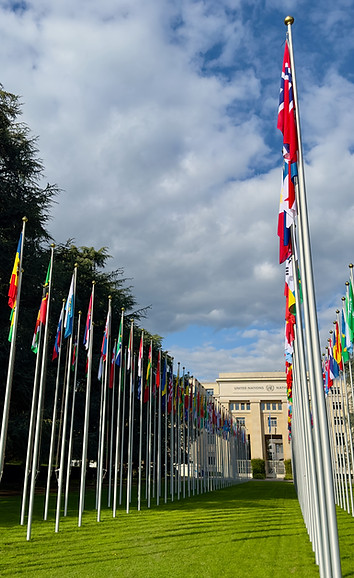
We stand at a defining moment for skin health and skin-related neglected tropical diseases (Skin NTDs). After years of sustained advocacy, the global health community has secured a historic mandate for action. As delegates gather in Geneva for the 79th World Health Assembly, we urge partners, governments and civil society to build on this momentum, translating commitments into tangible, funded, integrated and community-centred programmes that leave no one behind. WHA79 presents an important opportunity for Member States to demonstrate their commitment to skin health and to accelerate political will, financing and integrated action for skin NTDs within broader skin disease strategies.
The Skin Diseases Resolution
In May 2025, the 78th World Health Assembly adopted resolution WHA78.15, recognising skin diseases as a global public health priority. It was the first time in the history of the World Health Assembly that skin diseases were formally elevated to the level of a standing political commitment by Member States.
The resolution commits Member States to coordinate national action across the full spectrum of skin conditions. It calls for:
-
Strengthened financing and human resources for skin health programmes
-
Improved surveillance and data collection systems
-
Expanded capacity-building and laboratory diagnostic infrastructure
-
Equitable access to essential medicines for skin diseases
-
Integration of skin health with primary healthcare and UHC frameworks, with provision for mental health support, rehabilitation, and disability management
-
Innovative service delivery models, including teledermatology and AI-assisted approaches
-
Advancing research and innovation on skin diseases
-
Active engagement and meaning participation of people affected by skin diseases
-
WHO leadership in facilitating transformative change at global, regional, and country levels
Introducing GAP-Skin 2026–2035: Skin Health for All
Crucially, the WHA resolution also requested the WHO Director-General to develop a Global Action Plan for Skin Diseases (GAP-Skin), now titled GAP-Skin 2026–2035: Skin Health for All, for formal consideration at the 80th World Health Assembly in 2027. The GAP-Skin process now represents the principal accountability and implementation mechanism for translating the resolution into action at global, regional and national levels.
GAP-Skin Public Consultation
Following adoption of resolution WHA78.15, WHO conducted a survey of Member States and stakeholders to gather foundational inputs informing the first draft of the GAP-Skin. This survey highlighted a number of persistent barriers affecting progress on skin diseases, including workforce shortages, limited financing, inadequate access to diagnostics and treatment, stigma and discrimination, weak surveillance systems, and insufficient integration within primary healthcare systems. It also identified priorities for coordinated global action.
Following the analysis of these results WHO convened a group of stakeholders to develop a draft Global Action Plan which included six strategic objectives:
-
Elevate the Status of Skin Diseases as a Global Priority via National Public Health Plans
-
Integrate People-Centred Skin Health Services into Primary Health Care
-
Strengthen Workforce Capacity, Competency, and Health System Enablers
-
Promote Equity, Good Mental Health, Stigma and Discrimination Reduction, and Person-Centred Care
-
Enhance Surveillance, Data Systems, Laboratory Networks, and Research
-
Strengthen Coordination, Partnerships, and Sustainable Financing
In April 2026 WHO opened a public consultation on the draft Global Action Plan on Skin Diseases 2026–2035. This represented a pivotal opportunity for civil society, patient organisations, researchers, and governments to shape the framework that will guide global commitments for a decade. The consultation closed on 10 May 2026.
The latest updates on GAP-Skin, including key consultation outcomes and next steps, will be shared during the WHA79 official side event: From Resolution to Action: Implementing the WHA Resolution on Skin Diseases, Thursday 21 May 2026 18:00-19:30, in-person or online.
Ongoing and Upcoming Advocacy Initiatives
The period surrounding WHA79 reflects growing global momentum around skin health, with increasing political, technical, and civil society engagement across the skin diseases agenda. The following initiatives present important opportunities for the Skin NTD community to strengthen visibility, build partnerships, and help shape implementation of the WHA resolution and GAP-Skin process.
EU Parliamentary Action: Building from 'More Than Just Skin'
In February 2026, the European Academy of Dermatology and Venereology, alongside senior Members of the European Parliament, convened a high-level conference in Brussels examining how WHA78.15 can be translated into concrete EU and national policy. This signals growing political will in a key donor and policy-setting region. The Skin NTDs community should actively cultivate this corridor, positioning the NTD Road Map's integration agenda within emerging EU global health commitments.
One Health Research and Advocacy
Emerging research and advocacy efforts are increasingly positioning Skin NTDs within broader One Health frameworks that recognise the interconnected relationship between human, animal, and environmental health. A 2026 Nature Communications review has called for integrated Skin NTD action through a One Health lens. This framing opens new opportunities to engage climate, biodiversity, and development financing streams. Advocates should be prepared to articulate Skin NTDs within One Health narratives at WHA79 side events and bilateral engagements.
13 WHO Skin NTDs Working Groups: Maintaining Momentum
The working groups established after the first global skin NTD meeting in 2023 remain important drivers of technical and programmatic progress in this field. Their ongoing work on diagnostics, stigma reduction, data systems, community engagement, integrated service delivery, and workforce strengthening provides an important foundation for implementation of the WHA resolution and future GAP-Skin priorities.
Ensuring that their outputs on diagnostics, stigma reduction, community engagement, data systems, and more are visible at WHA79 is essential for maintaining skin NTDs as a global health priority.
Actions for WHA79
We ask all partners, Member State delegations, and civil society representatives to champion the following priorities at the 79th World Health Assembly:
Familiarise with the scope and aims of the GAP-Skin consultation
Attend the WHA79 official side event on Skin NTDs: From Resolution to Action: Implementing the WHA Resolution on Skin Diseases, Thursday 21 May 2026 18:00-19:30, in-person or online, This Side Event is hosted by: Côte d’Ivoire, Togo, The International League of Dermatological Societies (ILDS), Anesvad Foundation, International Federation of Antileprosy Associations (ILEP), and the International Alliance of Dermatology Patient Organizations (GlobalSkin).
Attend other relevant official and civil society side events: in-person or online, taking every opportunity to ask questions or add a comment to the official discussions to highlight skin NTDs.
Call for domestic financing commitments: In the context of shrinking Official Development Assistance (ODA), Member States, particularly endemic countries, must support mainstream Skin NTDs within national health strategic plans, essential medicines lists, and domestic budget lines.
Champion integration in all forums: Seize every opportunity to articulate the value of integrated Skin NTD approaches, linking to UHC, primary healthcare strengthening, and NCD agendas.
Centre community voices and lived experience: People affected by Skin NTDs who carry the compounded burden of disease, stigma, and socio-economic marginalisation must be visible in WHA79 dialogues and civil society can actively facilitate platforms for this.
Encourage Member States: Use WHA79 engagements to ask governments: What steps have you taken to implement the resolution? What is in your national action plan? When will you allocate resources?

Thank you for reading!
Published by Department of Malaria & NTDs, WHO Geneva
and WHO Advocacy & Communication Global Working Group for Skin NTDs
For future correspondence, sharing details of upcoming event or webinar and submission of Working Group updates, please mail at:
ipsita.nhm@gmail.com / comparetm@isntd.org
Or you may contact the Newsletter Team, mentioned here:
Adeola Bamisaiye, Marianne Comparet, Ipsita Ghosh, Michael Head,
Priya Pathak, Nikita Sarah, Anna Wickenden and Yona Yangaza
The International Society for Neglected Tropical Diseases
