


On the occasion of the 79th World Health Assembly, the International Society for Neglected Tropical Diseases cordially invites you to participate in:
WHA79 Side Event
Arboviruses: Shaking or shaping the future of global health?
Arboviroses : vers une santé mondiale bouleversée ou refaçonnée?
Tuesday 19 May 2026
Networking breakfast 8.00-11.00 | Panel discussion 8.30-10.00 CEST
Hotel President Wilson
47 Quai Wilson, Geneva, Switzerland
Room: Salon Apollon
Hosted by the International Society for Neglected Tropical Diseases
As vector-borne health threats and outbreaks intensify in historic and new regions, this WHA79 Side Event aims to explore how arboviruses - including dengue, chikungunya, Zika, yellow fever and Oropouche – are shaking health systems and reshaping global health priorities and collaborations. At a moment when the global health architecture is being fundamentally reshaped, this event will examine whether these diseases are destabilising systems or catalysing innovation and collaboration, and how climate change, urbanisation and global mobility are accelerating their impact. The discussion will bring together Member States and experts from science, policy, community health and climate to chart a path forward.
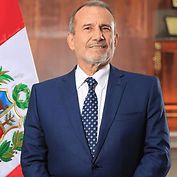
H. E. Ambassador
Elmer Schialer Salcedo Peru

Dr. Amr Kandil
Deputy Minister of Health and Population for Preventive Medicine, Public Health, and Primary Care Affairs, Arab Republic of Egypt

Prof Lee Ching Ng
Director of Environmental Health Institute, National Environment Agency, Republic of Singapore

Dr Ibrahima Socé Fall
Chief Executive Officer, Institut Pasteur de Dakar

Dr Maria Van Kerkhove
Director, a.i. Department of Epidemic & Pandemic Preparedness and Prevention
World Health Organization

Dr Laurence Cibrelus
Team Lead, WHO Global Arbovirus Programme
World Health Organization

Dr Maru Aregawi Weldedawit
Unit Head, Vector, Disease Control and Elimination / Eradication, Malaria and Neglected Diseases (MNT) Department
World Health Organization

Sejal Mistry
Managing Director, Crowell Global Advisors & APEC Dengue Roadmap

Dr Priscila Ferraz
Deputy Executive Secretary, Global Coalition for Local and Regional Production, Innovation and Equitable Access

Dr Isabela Ribeiro
Viral Diseases Cluster Director, DNDi and Dengue Alliance

Dr Kevin Tetteh
Director Malaria & Fever and Climate and Health Strategy Lead, FIND and Co-Chair Collective Action on Dengue
PROGRAMME
- Updates on the progression of the arboviral threat worldwide (dengue, Zika, chikungunya, yellow fever, Oropouche fever...)
- Member States statements on arboviruses experiences and collaborative strategies
- Discussion with participants and forum for exchange of best practices
- Open discussion and networking among participants
-
Welcome: Marianne Comparet, ISNTD
-
Opening Remarks and Arboviruses update
-
Dr Maria Van Kerkhove (Director, a.i. Department of Epidemic and Pandemic Preparedness and Prevention, WHO)
-
Dr Laurence Cibrelus (WHO Global Arbovirus Programme Team Lead)
-
Dr Maru Aregawi Weldedawit (Unit Lead, Vector, Disease Control & Elimination / Eradication, Malaria & Neglected Diseases (MNT) Department, WHO)
-
-
Member State perspectives
-
Ambassador H. E. Elmer Schialer Salcedo, Peru
-
Egypt's perspective: Dr. Amr Kandil (Deputy Minister of Health and Population for Preventive Medicine, Public Health, and Primary Care Affairs)
-
Singapore's perspective: Prof Lee Ching Ng (Director of Environmental Health Institute, National Environment Agency)
-
Dr Ibrahima Socé Fall (Chief Executive Officer, Institut Pasteur de Dakar)
-
-
Coalitions and the way forward
-
Sejal Mistry (Managing Director, Crowell Global Advisors & APEC Dengue Roadmap)
-
Dr Priscila Ferraz (Deputy Executive Secretary, Global Coalition for Local and Regional Production, Innovation and Equitable Access)
-
Dr Isabela Ribeiro (Viral Diseases Cluster Director, DNDi and Dengue Alliance)
-
Dr Kevin Tetteh (Director Malaria & Fever and Climate and Health strategy Lead, FIND and Co-Chair Collective Action on Dengue CAD)
-
-
Discussion and Q&A with audience
-
Launch of "Arbovirus Exchange" - Conclusion and Thank you, ISNTD
BACKGROUND
Arboviruses, a group of viral infections transmitted by infected arthropods including mosquitoes, ticks and midges, represent a growing and significant public health threat globally. Dengue fever, a tropical disease found in just 9 countries in the 1970s, is now observed in over 140 countries with reported dengue cases growing tenfold just over the last two decades. Explosive outbreaks and the circulation of four closely related but distinct dengue serotypes are likely to pose future scientific and operational challenges. The same period has witnessed the emergence and re-emergence of chikungunya outbreaks across continents. Other mosquito-borne diseases such as yellow fever have a strong potential for large urban outbreaks in vulnerable populations and, since late 2023, Oropouche fever has spread out of South America and the Caribbean to nonendemic areas. Concerns have emerged about congenital and other complications. This is signalling that new regions have become environmentally suitable to arboviral diseases and an additional half-billion individuals could be at risk of them by 2050.
Although arboviruses and the forces driving their expansion are threats of a global nature, response to these outbreaks often remains fragmented. With gaps in coordination, diagnosis and surveillance, accurate monitoring and response to outbreaks can remain a challenge. In addition, this progression in intensity and geography places acute strain on health services: health systems have been shaken by unprecedented arbovirus outbreaks.
As arbovirus outbreaks expose how deeply interconnected climate, urbanisation, mobility and health systems truly are, the monitoring and response to arbovirus outbreaks offers the promise of a new era of global health collaboration. Their expanding reach is pushing countries to strengthen early‑warning systems, integrate environmental and health data and invest in more agile, community‑centred responses. They’re also accelerating the shift toward prevention‑focused strategies from vector control to vaccination and climate‑informed planning, while highlighting persistent inequities in access to diagnostics, surveillance and care. In many ways, arboviruses offer a path to fundamentally shape the future of global health.
On many levels, arboviruses are acting as a stress test that is driving stakeholders and policy makers toward more resilient, anticipatory and collaborative models of action. Shaken or shaped, arboviruses will transform the future of global health.
This WHA79 Side Event aims to place arboviruses at the centre stage of the global health agenda, highlighting their acute threat to global health, as well as the catalytic role collaboration on arboviruses.
OUTCOMES
In light of this, this WHA79 Side Event proposes to offer a forum as part of the 79th World Health Assembly to public health officials, policy makers and organisations, industry, NGOs and civil society as well as Member States and the WHO to:
-
share updates on the evolving global arboviral situation
-
share Member State experiences and recommendations to strengthen and intensity arbovirus surveillance, including regionally or internationally
-
frame the current arbovirus outbreaks as an opportunity to strengthen international cooperation on global health threats, through the lens of current wider efforts in pandemic preparations
-
to provide a breakfast networking opportunity around the topic of arboviral diseases
-
to result in a Briefing Paper with recommendations
Find out more about dengue and the global campaign for a World Dengue Day


The Dengue Advisory Group (DAG)
The International Society for Neglected Tropical Diseases
